Popular Posts

Wednesday, 28 November 2018

Peer Pressure can be difficult as an adult. But can you remember it as a teenager? It was really unpleasant. That horrible feeling of being pressured into doing something you didn't want to do, that you knew wasn't right, but felt you had to for fear of being shunned by your "friends".
Man, I remember it. It might have been 30 years ago, but that awful feeling of betraying my sole for what I thought was the greater good, comes back when I look upon my poor little pimpled, teenage face. I remember that drive to want to fit in. The feeling of not liking myself, of wishing I was everyone BUT who I was. And the need to do whatever it took to have the other girls like me. I don't think I felt liked by anyone. Not even my boyfriend/s. It's amazing how a poor self-image can run that deep. *shudder* I wouldn't want to go back there for anything.

Which is why I love writing Contemporary YA novels. I want today's girls to know what I didn't: that they have other choices. And that, in fact, the choices they make in terms of who their friends will be, can have a huge impact on how well (or not) their teenage years will play out. In the first few years as a pre-teen and teenager, I chose badly. I want other girls to choose differently. I want to help them know how to choose differently and to see why it is important that they do so. In some cases, having no friends is better than having the wrong ones.
At least when you have no friends, new friends know to come looking for you.
Do you have a teenager struggling with choosing who will be the best kind of friends for herself? Does she know how to find her tribe? Maybe The Boy in the Hoodie would be a good stocking-filler for her this year.
Here's an excerpt from the end of chapter one from The Boy in the Hoodie:
But no, she brought us alcohol. Her Mum's favourite, she'd said. She took another swig, then passed it around for us all to drink from again. Keira and Megan took bigger sips this time.
I waited my turn with a dry mouth. I tried to convince myself that I had a choice; I didn't have to drink it again. Surely if I didn't, my friends would understand. And with time, they would forgive me. Eventually, we’d move on.
But then again, would it hurt to have another sip? No one else would ever know. It would be our group’s secret; a stupid story to laugh about.
There was more than one way that this scenario could play out, but which choice—to drink or not to drink—had the least consequences?
I was quite sure I just hadn't anticipated the one that actually happened.
The bottle was pretty much empty by the time it got back to me. Only one mouthful left, at best. I toyed with the bottle for a moment, looking at it, rolling it in the palms of my hands. Three sets of eyes watched me closely. I could see the words forming on Paige's lips: Mary. Her narrow eyes were telling me to hurry up and drink it. I stared down at the bottle. The first sip, I hadn't known what I was doing. This time, I'd be knowingly drinking alcohol at school.
And so when Mr Wally walked around from behind to row of pine trees that lined the school boundary, I froze. It hadn't occurred to me to empty the bottle, to tip it over, even just to hide it behind my back. I had still been in the process of deciding whether I was even going to drink from it again.
I'd never been good at getting caught out. Mum reckoned she could always tell when I was guilty even before she asked the question.
Why exactly Mr Wally felt the need to inspect the bottle, I don't know. Maybe it was Paige's reputation. Maybe there was a smell in the air. Maybe it was the bewildered look on my face. But suddenly I was suddenly being marched toward the Principal's office.
And Mr Wally had a bright pink drink bottle in his hand with my fingerprints all over it.
Available now from:
Booktopia
My publisher, Rhiza Press
My distributor, NovellaDistribution
KoorongBookstore
Or at your local bookstore. If they don't have it in stock, ask them to get it in for you!

Thanks for reading. If you’re interested in connecting with Catriona, you can look her up on Facebook, or find out more at her website: catrionamckeown.com.au


Saturday, 10 November 2018

Looking for Anxiety in the highs and lows (a parent's point of view)

Anxiety. It touches so many lives these days. And to such different extents. While some disorders are thought of in terms of placement along a spectrum, I think anxiety can be thought of in terms of placement along a journey. And where you, and/or someone you love, is along that journey will depend on how you see it and its impact. It is a difficult journey for everyone - and not just those suffering its effects. It impacts on others around them, too. I know, because I have a child with anxiety.
I wanted to share some things I have learned so far, as a parent. They're not the only needs to know. They're only one parent's experience and our journey has far from ended. But perhaps this can be your starting point of what to know if you suspect you have a child with anxiety.

1. Knowing what to look for helps, especially in the early days.
* Look for signs of lacking self-care. Not showering regularly. Not brushing their hair. Not putting enough clothes out to be washed
* Having a messy, and especially smelly, bedroom
* Be aware of any perfectionist behaviour
* Not sleeping well
* Picking at their skin, especially their face
* Watch their bank account. Needing the immediate gratification/thrill of spending money can become an issue.
* Look out for areas of their body they are hiding. Some anxiety sufferers will self-harm strategically and hide it meticulously
* Note any reduction in wanting to do things with other people, especially their friends
* Panic attacks can happen at night, or may not be recognised by the person who had it. It took us too long to realise our daughter was having panic attacks; we didn't know what was going on, or who to go to for help
* Changes in their eating patterns
2. There are some things you should avoid.
* Don't assume because they're seeing professionals that they'll tell them everything
* Don't dismiss a professional's suggestion to try medication. Medication could give you your child back and give them a chance of recovery
* Don't assume they'll get better and will stay better - even with medication
* It's important that you don't blame yourself, either for their anxiety or for how you've dealt with it to this point. They need you to be healthy and strong for them. Every day is a new day - be grateful for that!
* Don't try to cure them. Love them and accept them, no matter what they say or do (or don't)
* This is a huge one: don't expect them to be able to teach you how to help them with their anxiety. They're struggling to work it out for themselves. Try different tactics. If it works, great. If not, try a different one next time
* Don't expect things to stay the same. What works and doesn't work will change. They're on a rollercoaster ride - expect to have to ride it with them
*And don't try to do it alone. Talk to people. Watch documentaries. Read blogs. Get on The Mighty and see what others say about what living with anxiety is like. The more you can understand it, the better chance you'll have in getting to a place where you can support them on the journey. There was a terrific show on SBS where people spoke about what it is like to live with anxiety and how suddenly it can appear in someone's life. If you need a starting point, try watching it: https://www.sbs.com.au/ondemand/video/1351060547935/insight-beating-anxiety
Things that can help, and signs they're doing better:
* They become more honest with where they're at and where they've been on their mental health journey
* They start taking interest in things outside their immediate world again
* They start wanting to care for something. A kitten. A plant. Or six plants. (Get them for them.)
* They start being a better advocate for themselves with their anxiety
* Improved sleep
* They start to look after themselves a little again - eating better, wanting haircuts again, the washing basket fills too quickly for you to keep up with
4. If you suspect you are living with a child/teenager/young adult with anxiety, you probably are. Please, don't ignore it. Please please, don't see it as a "fault" of the child's. Don't leave it to fix itself. Get some help. It doesn't have to be an expensive journey. Start with your GP or chat to someone at HeadSpace; there are plenty of options for help out there.
Thanks for reading. If you’re interested in connecting with Catriona, you can look her up on Facebook, or find out more at her website: catrionamckeown.com.au


Asking some hard questions... about parenting anxiety

I've been pondering this week about the ways anxiety and PTSD have affected my family. In many ways, I actually don't know. We can see, to some extent, how it is impacting on my daughter who has the anxiety. But how has it affected my other children? and me?

There are nine years between my oldest and youngest child and it occurred to me, as I pondered, that she probably isn't even aware her older sister has anxiety. And even if she has heard that word, she would have an extremely limited understanding of what that means. I'm not sure she's seen her sister have a panic attack. She's probably unaware that some days, when her sister stays home from school, it's because she can't get out of bed. And she wouldn't understand why her sister struggles to deal with her when she's left in charge, and her other older sister has to take over caring for her. I guess at some point we'll have those conversations with her, but when? I really don't know.

And then there's my middle daughter. She has a terrific relationship with her older sister and is very aware of the part anxiety is playing in her life. She looks up to her sister. She is invited into her sister's world through mutual friendships at their youth group, often hanging out together, going on lunch dates, to the movies, and to evening church services. But then, when my middle daughter's teachers tell me she has had incidents at school that look like panic attacks, it begs the question - is she experiencing her own struggles with mental health (after all, it often runs in families, and even more so follows same-gender siblings) or is she just learning to cope with the world around her in the same way her older sister does? I really don't know.

And then there's me. How has having a daughter with anxiety affected me? It is difficult to say. How much of the changes that have happened in my life have been a result of this greater level of need to love and support her, which takes time and effort and resources, and how much has it been because I'm so much busier now. I feel like I don't have time and energy to care for people outside my own family like I used to. I can't remember the last time I cooked another meal for a family in need. I can barely remember the last time we had people over for dinner. Some days I feel like I can barely keep up with the medical appointments and the need to have my children at home so they can recover from their days, let alone work and study and writing and cooking and shopping and laundry and and and... And yet God calls us to love and care for others. I used to do that - does God remember?

Perhaps I need to remember that is just for a season. It could be a few years. It could be ten. And actually, it doesn't matter.

Wednesday, 31 October 2018

PTSD and 1st anniversary refelctions

It's been a long time since I last blogged, but there are lots of reasons to get behind my computer and write today.
For one thing, it's the one year anniversary of The Boy in the Hoodie being officially released into the world.
It's been such a long journey that it feels surreal that it has only been one year. In my mind, The Boy in the Hoodie is much older than just one year. It was birthed during the month of November (during NaNoWriMo) four years ago. So in some in some ways, today I'm also remembering the novel's conception all those years ago.
But today I don't want to focus on the novel, The Boy in the Hoodie, so much as I do on one aspect of the protagonist, Kat, as we find her at the end of the novel. Due to her experiences, in the end we are given some insight into her journey with Post Traumatic Stress Disorder (PTSD). The scenes that show some of what Kat went through with her PTSD are not completely fiction. I am an outsider looking in, watching my own daughter go through her own PTSD experience.
And I've got to tell you, some days it is crazy, super difficult to watch on from the outside.
In my paid job, as an Inclusive Education Teacher, I speak to a lot of parents about their experiences with their children growing up. I've listened to them speak about the realisation that there was something different about their child, that their experiences as a parent were different from those of their friends around them. And then, come the diagnosis, they speak of the steep learning curve of trying to work out what exactly the diagnosis means for them and their child, and some of the grief that comes with that. It's not easy to watch your child struggle. It's not obvious how you should parent them now. It isn't easy to sift through the myriad of information we now have available to us (thanks to Google) and find what is true, what strategies are appropriate, and what is going to work for your family. Every day seems to be trial and error of working out this new reality.
I had no idea when I began working as an Inclusive Ed Teacher that I would come to know first hand what it was like to be one of those parents. But it happened. After a year of counselling sessions and psychologist visits, followed by a few trips to a terrific local psychiatrist, my daughter was diagnosed with Post Traumatic Stress Disorder and Social Anxiety.
Fast forward a couple of years to last night, my daughter and I sat in the toilet cubicle together (yes, I crawled under the door to get to her, because I love and care for her that much) and formulated a plan for the evening. It was all I could do to not cry with her as she talked about how difficult the night was and how much she really, really, didn't want to do it. And the truth was, she didn't have to do it. She could have retreated to the car and not walked up on stage to get her awards. She could have sat outside and not watched her amazing and beautiful friends received their leadership positions for next year. She could have buried her head in the proverbial sand tried to pretend it wasn't happening. But instead, I watched my incredibly strong and brave daughter do exactly what she did not want to do.
And yes, I cried. While my best friend sat beside me so excited, as she knew her son would shortly be named School Captain for 2019, I cried. And she still managed to support me. I shouldn't have needed it. I should have been stronger. I wish I could have been more brave.
And so this is where my pride resides: Not in the multitude of academic awards my daughter received last night, but in the fact that she was there. She got up on stage. With all the braveness a young woman can muster, she shook her teacher's hand, walked across the stage and took up her position with her cohort. And she continued to stand in front of all those people until it was time to walk off the stage. And then, she walked back into the auditorium to watch her best friends (and she has a heck of a lot of really top quality, amazing friends) take out award after award and the positions of responsibilities as the 2019 leaders of the school. My heart screamed for her, knowing it would be hurting her to be there watching (and to not be up there, joining in with them). My emotions streamed down my face as I ran through all the what-ifs of her life and asked yet again, for the hundredth time, why God has put it on her to carry this burden. I know His ways are perfect. I know His plan for her is to prosper her. I know she has already handed over her plans for her life into His safe hands. I know it is not my fault she has PTSD. I know. I know. I know.
Today is a new day. And so today, for me, is very much about celebrating my daughter and her incredible strength and resilience. I am so immensely proud of her. I hope you see some of that in Kat, too, as you read the final chapters of The Boy in the Hoodie. The way she pressed on and stayed true to who she had become and worked around her PTSD to achieve the goals she had placed before her. And I hope you noticed the joy and the pride from Kat's family as they rallied around her to help her see the amazing young lady she was becoming.
So instead of writing more short stories and doing some advertising for The Boy in the Hoodie, which was what I had planned for today, instead I'm going to take my daughter out for lunch. We'll go op shopping and hang out and spend the day recovery from the exhaustion that was the 2018 Academic Awards Ceremony. And I'll continue to be incredibly grateful to have such a daughter, who is so giving of herself and her talents, and who will continue to be my inspiration when writing strong female characters who push on through hardship with kindness and determination.
Photo: *Insert photo of my daughter* But I won't include a photo, because although she gave me her permission to write about her PTSD, she doesn't need the world to know exactly who it is I'm writing about. Instead, picture a beautiful girl with long brown hair and a smile that lights up a room when she walks into it - sorry, I know that's cliched, but I'm sure the someone who penned that cliche did so with her in mind.
It is the 1st anniversary release day. Have you not read The Boy in the Hoodie and want a copy? Find me on Social Media and send me a message and I'll see what I can do to get you one.
You can connect with Catriona through social media here

Saturday, 10 February 2018

What's in a week?

This past week has been a big week for me, and I'm starting to feel the effects of it.

For one thing, my youngest daughter, who is eight years old, was really quite sick this week. This meant a week of jugging who would care for her when both her dad and I should be at work, doctors appointments, other life-stuff happening (including my first born turning seventeen years old), and trying to get work done in the midst of my littlest girl needing me. All. The. Time.

Contributing to this, work has been kind of overwhelming. I have so much to do and not enough minutes in the day to do it all, which means constantly prioritising and trying to prevent any spot-fires from breaking out. This means I'm starting to miss things, forget things, even overlook things. Mostly home things; I don't think I've messed up anything at work, so far anyway. But, like, I've only just realised I have an appointment for my oldest daughter right in the middle of a class I'm supposed to be teaching this week. In my defence, I made the appointment last year, but I've only realised now that there is no way I can possibly get her to that appointment. And that is just one example. Oh, the joys. This has been my life this week.

Why am I telling you this? I guess because we all have weeks like this one has been for me. Parents yell at their kids, teachers yell at their students, work commitments in amongst school commitments can feel impossible to survive. Bad news comes in. Sickness. People hurt other people. It happens. All. The Time.

When I was a teenager, I would easily become overwhelmed by life. Sometimes, negative thoughts would come in and plague me, and I'd take my lack of self-worth and push everyone away with it. Instead of seeking people's support, I'd loathe it. I'd feel unworthy of my friends love and attention. I'd convince myself they didn't like me that much. I would withdraw into a bubble of self-pity and anguish. I could be a very miserable person to be around. I didn't like myself very much. I saw very purpose in my life. I probably had depression; I don't know, I was never diagnosed. My parents knew very little of what life was like for me inside my head. It was very lonely.

And it didn't leave me once I grew out of the teenage years. The feelings followed me into adulthood, my marriage, and motherhood.


Wednesday, 24 January 2018

Australia Day 2018

Here in Australia, we celebrate Australia Day on the 26th of January. It’s a national holiday, spent doing the sorts of things Australians are famous for loving, namely, going to the beach, cooking lamb or sangers (read: sausages) on a BBQ with a bunch of friends. But mostly, just enjoying a day off from work. This year Australia Day falls on a Friday. Perfect! Australians love our long weekends.
(Picture source: https://countrydigest.org/australia/)
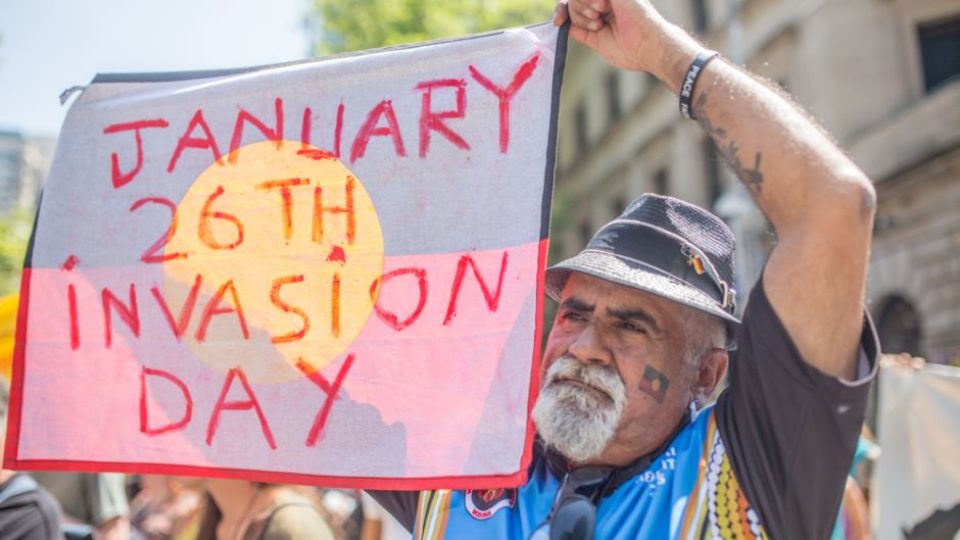
But not everyone celebrates Australia Day and not everyone thinks it should be celebrated on January 26th. It is, in more recent years, what we call controversial.
And it doesn’t take much looking back into Australian history to discover why. Prior to the 26th of January 1788, the Indigenous residents of this great land had lived happily for a very, very long time. Suddenly, tall ships containing white ghost with exploding sticks arrived on the shores of New South Wales and a very great injustice began.
(Picture source: https://thenewdaily.com.au/news/state/vic/2017/08/16/melbourne-council-votes-drop-australia-day-ceremonies/)
Some people call the 26th of January Invasion Day and see it as a day of mourning, not of celebration.
Others say we’ve come a long way, with our National Sorry Day, the day that the Australian Government gave a public apology in Parliament recognising the damage done to our Indigenous residents through horrendous policies from the past, where families were torn apart and cultures, ancient cultures, destroyed. We, as Australians, had a lot to be sorry for. And we still do.
The year Australia Day changed for me
This photo is of some of my family celebrating Australia Day in Broome, Western Australia about 6 Years ago. It was the week before we moved to a primarily Indigenous Community. Moving to this community, and seeing the long-term, ongoing effects of some of the Australian government’s past policies changed my feelings toward Australia Day. I had, previously, loved celebrating our National Day, our great nation, our people and culture and all that entails. But that year I saw it through different eyes because I saw first hand the ongoing, deep issues we created for our original residents. It personalised it for me. It made the story of invasion, rather than settlement, real.
There are a lot of social issues, a lot of hurts still to be healed, a lot of generational problems that cannot be solved overnight. It’s so, so complicated. But there are also a lot of really good things happening in some of our Indigenous communities. A sense of pride for who our Indigenous people are and all they represent, is slowly returning to their communities. Languages are being restored (though many have become extinct), culture is once again being passed down from one generation to the next. People are starting to stand up and be proud that they’re indigenous Australians.
But that doesn’t take away from the fact that January 26th 1788 was not a good day in the history of the world, let alone in the history of Australia.
(Photo source: http://aussiegossip.com.au/life/celebrate-australia-day/)
I remember last Australia Day, in 2017, reading many different suggestions about Australia Day and whether the date should be moved, or whether the 26th should be turned into a day of mourning. There are many passionate people out there with their opinion on the matter. But the one I liked, and that I subscribe to the most was this. That we begin January 26th in sobering rememberance of the events in 1788, when Australia was illegally invaded by the British, and the ongoing effects that had on Indigenous Australians. And then, at mid-day, we begin the celebrations. We celebrate who we are becoming as a nation, a nation who accepts that wrongs were done in the past and spends its days trying to make it right again. A nation who recognises saying sorry isn’t enough, and gets behind those who want to see a change and make a difference in the lives of those who have been wronged. After a time of mourning, we begin a celebration of the reconciliation process, and the original culture of our great land, and how it is a part of us all and makes us who we are as Australians, whether Indigenous, a descendent of the invaders, a migrant, or someone wanting to call Australian their permanent home.
With all that in mind, I’ve joined in with 11 other Australasian authors to give away a Prize in celebration of Australia and the great nation of people we are. The 12 novels are written by Australians and many are set in Australia as well. The Boy in the Hoodie, is, ofcourse, both. To enter, pop along to this website: http://www.iolagoulton.com/giveaways/AustraliaDay and sign up to win.
And happy Australia Day - at least for after midday.
If you would like to connect with Catriona further, check out her website here, or head over to Facebook and say g’day here.

Tuesday, 9 January 2018

On getting published: Pt 2 Actual publication

In my last blog, I talked about my journey to publication, with the first part being about the writing and editing of the The Boy in the Hoodie. I ended the blog with the reminder that getting published is like the tip of the iceberg, where most of the iceberg is hidden under the water. If you haven’t read about all the ground work that goes into preparing for publication, I suggest you might like to go back and read that blog first. Then come back and read about this, more exciting, part. :)
After having written and edited The Boy in the Hoodie, and decided it was right to start sending to publishers (which, by the way, I never really thought it was ready, but I don’t think I ever would have thought it was!), I simply googled publishers in Australia. In my google search, I found a number of Australian publishers who were accepting unsolicited manuscripts at the time. They were varied in their expectations. Some only accepted them on particular days, or during particular months of the year. There were a couple who were running competitions where you could enter your manuscript and the winner would get published. I was surprised at how many opportunities were around.
However, there is some controversy amongst authors as to whether this is a good way to submit a manuscript. Some bloggers were quite scathing of these sorts of submissions. Others said it was more important to find a good agent, than to pursue a publisher. I took all this into consideration, but in the end decided I would send the manuscript to two publishers. One was Text Publishing, who have published one of my favourite Australian authors, Graham Simsion. The other was Rhiza Press, who I knew preferred family-friendly novels and at the time were only accepting YA manuscripts. They’d also previously published the winners of the CALEB prize, so I figured I was in with a chance with them.
I carefully read over the submission guidelines of both publishers. Their requirements were different. Rhiza Press, for example, wanted the first three chapters, and then another chapter from the novel. Both Publishers wanted a full synopsis (and writing that, in itself, is a long and difficult task!). They also both wanted a personal CV related to my writing. It was here that the entries into competitions (not only for The Boy in the Hoodie, but for Dangerous Exchanges as well), and the success I’d had, was very helpful. I had also had numerous short stories published online that I could provide links to. I was also able to mention that I’d done a short course at The Writing Stuido. I also took quotes from my readers, some of the positive words they had written in response to having read the manuscript, and included them in my cover letter. All these things gave reason for the publisher to at least look at what I’d sent in to them.
The publishing houses didn’t promise much. They both said I could expect a three month wait before hearing if they were interested in reading more. Rhiza Press allowed me to submit online. Text Publishing wanted a hard copy. I submitted to both and started to play the waiting game.
But within two weeks I’d heard from Rhiza Press, asking for the rest of the manuscript. I madly finished the rest of the edits I wanted to make before sending in the full manuscript (after all, I thought I had a couple of months to get those final edits done!) and submitted it all. A couple of weeks later, I received an offer of a contract for publication.
I was at school at the time. Normally I don’t carry my mobile phone with me at school, but for some reason I’d grabbed it when I’d gone off to class to see a student. The student wasn’t able to be released from class for a few minutes, so I sat outside the classroom and checked my personal emails while I waited. And there it was - in my Inbox - an offer of contract from Rhiza Press. I rushed to the staff toilets and cried. :) Then I pulled myself together and went back to work. :)
My husband and I spent the weekend looking over the contract. We googled publishing contracts to see what was normal, and what to look out for (pretty novice, hey!), before I signed it and sent it to them.
About a month after all that happened, I got an email from Text Publishing - a lovely rejection letter, saying they’d read The Boy in the Hoodie with interest but would not be pursuing publication at this time. It was amazing for them to have even let me know, and very encouraging to know they’d read my submission.
And so began the next stage of the editing process. I was offered the contract from Rhiza Press at the beginning of the year, and spent most of the year revising and making changes suggested by my editors. Many edits were simply formatting. Other suggestions were fairly major, such as removing a chapter they felt was slowing the story down. It was an amazing learning experience. In many respects it was a difficult year, as I was working four days a week as a teacher, studying a Masters degree, one of my daughters was having major panic attacks and was consequently diagnosed with Social Anxiety, plus my husband has long-term health issues, so I was a little time poor. But I learned so much and as a result I believe I’ll be a better writer for my next novel.
The Boy in the Hoodie was released on November 1st 2017. Fitting, since I had written it in November three years earlier. Three years of editing. Three years my baby. It’s lovely to have it on the shelf and to be able to explore other characters and ideas again. I love the writing stage and am excited to be back in it. And I can’t wait to share my next story idea with the world again. Should I ever get this new one finished.
Thanks for reading. If you’re interested in connecting with Catriona, you can look her up on Facebook, or find out more at her website: catrionamckeown.com.au

Tuesday, 2 January 2018

On getting published: Pt 1 The Writing

I’ve had a number of people ask my about my journey to getting my novel, The Boy in the Hoodie, published. As much as I am happy to talk about it with people, I thought I’d blog about it. It will help me to remember it Further down the track, too!
My journey to getting published was quite long. When I started on the journey nearly six years ago (though I could go back as far as when my teenage years!) I had no idea what I was in for - or how much I still had to learn about writing. A huge part of my journey was about confidence building. Writing is a lonely business. I didn’t have a network of writers to talk to, to show my writing to, back when I started. The first novel I wrote (which remains unpublished, and for good reason) I had friends read, and with positive results. So I send it to an editor for an appraisal, who promptly told me (in a gentle way) just what a long way I had to go in terms of getting my story structure right, plus a whoooollllleeeee lot of other things. Taking her advice onboard, I rewrote the novel. (This was a 120,000 word novel, so you know, no small task!) I then submitted to the Omega Writer’s CALEB competition, mainly because they promised detailed feedback. When the feedback sheet arrived in my Inbox, I read it with one eye closed (literally). And as I read it, I realised they liked it. It was shortlisted as a finalist, but it didn’t place. And no wonder - the judge’s comment suggested the novel still required 100+ hours of editing. So, Dangerous Exchanges got placed in the proverbial bottom draw where it has remained ever since.
But the experience gave me confidence. Some of the judge’s comments filled me with hope that my writing was good. They loved my characters. They loved my dialogue. They was hope.
At the time, I had started reading a heap of YA novels, which I was loving. My mum had always encouraged me to write for a younger audience. I think she was thinking more like children’s books, but I had this story idea, this character, who wouldn’t leave me alone. Though I started with the character Adrian, Kat’s struggle with Peer Pressure and some nasty so-called friends was not far behind. Together, they formed The Boy in the Hoodie.
I prepared to write The Boy in the Hoodie during the month of November, for National Novel Writing Month (NaNoWriMo). I had a good grasp on my characters and the story line. I learned from my previous mistakes, and the advice given by the manuscript appraiser, Iola Goulton, and heavily planned what would happen at each stage of the novel. KM Weiland’s Structuring Your Novel (which continues to be my go-to writing book for structure) was frequently opened and reread throughout the process. I wrote the first few chapters in the lead up to NaNoWriMo, and then wrote it. I joined up with two writers on the other side of Australia, who read my novel as I wrote it. Their encouragement was invaluable.
And so, the entire book, all 65,000 words, was written in six weeks.
Then I began editing.
As I tell my students, I wrote the novel in six weeks, but I spent three years editing it. Writing the mansciprt is really just the beginning. In many ways, it’s the easy part.
Before I spent too much time editing the manuscript, I was desperate to know if it appealed to teenagers. I’d never written a YA book before. So a couple of months after writing it, I sent the manuscript to a teenager whose mum was in an online writing group I’d connect with - her name is Sarah. Sarah read it for me, and loved it. However, originally Kat and Adrian were much younger, and Sarah suggested they needed to be older, that they read like older teenagers. So began my first serious edit - Kat and Adrian went from being in Grade 6, to being 15 & 16, in High School. That meant changing a lot about things that were happening at school and with Kat’s friends. Sarah’s encouragement that it was a good story, and that she found it difficult to put down, spurred me on.
After that major round of editing, I then gave the manuscript to the parents of teenagers, to gauge their reactions, and to a couple of teenagers at the school I work at, who said they’d read it for me. Everyone continued to give me good feedback. So I persevered.
As happy as I was with the story, and the feedback I was getting from my readers was positive, there was still plenty to work on. Whole chapters were deleted. Minor characters were given more substance as I considered there own backstory and journey. For example, did you pick up that Kat’s mother suffered from Post Natal Depression after George was born? And originally Kat’s little brother George played a much bigger part in the story - and had autism. There needed to be more about Kat’s home-life. Things needed to be made more realistic. I read and reread and reread the manuscript, making notes of what worked, and what didn’t seem to fit.
After two years of editing, I decided to send the manuscript to a US competition, Ink & Insights, that also promised lots of feedback. It only required the first 10,000 words, so it was also a good way of finding out how my story was reading for the first 5 or 6 chapters. The competition gives feedback from four judges (who are editors/publishers/agents in the US), so was a great opportunity for only $40 or so Australian dollars. I received the email with their feedback and once again read it with one eye closed. Until I realised they had all really good things to say about it! The Boy in the Hoodie came fourth that year. Such a confidence boost. I had also entered the manuscript in the Omega Writer’s CALEB competition again. This time, there wasn’t the same feedback, but I was notified that I’d again been short-listed. I laboured and laboured over whether to fly to Sydney for the announcement of the winner. I was so anxious about going, and finances were a little tight, but in the end I prayed and prayed and decided God was saying it wasn’t necessary for me to go. So I opted instead to watch the announcement through a Facebook live recording.
That year, The Boy in the Hoodie won the first prize.
But perhaps the even bigger encouragement cam when my novel came runners up in the overall CALEB prize, where it was up again all the books that had been entered, from all categories, most of which were published books. That gave me the confidence to send the manuscript to some publishers. So that’s what I did.
The journey of going from having written a story, to having one ready to send out to publishers, took a village. Having people read my writing, give feedback, and encourage me in the process - well, I couldn’t have done it without them. But in entering the competitions, I gained the confidence I needed to be able to start thinking I could one day get it published. I needed both - I needed the readers to tell me they liked it, and I needed the professional writers to tell me I was on the right track. If you’re interested in pursuing publication, I encourage you to do the same thing. There are other really important reasons to getting others reading your writing. I’ll tell you about them in my blog next week, when I’ll run through getting the manuscript in front of publishers and the process I went through to then get it published. But really, it’s all part of the one big long story, which is why I wanted to tell you about the writing part first. Getting a manuscript in front of a publisher is like the top of the iceberg sticking out of the water. Most of the iceberg is under the water.

Tuesday, 19 December 2017

My last post for 2017

Well, I don't know about you guys, but when I think back on the year of 2017, I whisper a quiet little 'wow'. It's been a crazy ride, from having a publisher express interest in my novel, and then offer me a contract, way back in January, to the extensive learning curve of editing, looking at book covers, getting my first box of The Boy in the Hoodie on my doorstep, book launches and signings, and of course trying to get the word out so people will consider keeping a copy of my novel on their bookshelves.
This year, the Christmas break is much anticipated in my household.
(Thanks for the Christmas spirit, http://www.interiordesigninspiration.net/wp-content/uploads/2012/11/Christmas-Decorations-016.jpg)
Christmas, for me, means school holidays, the sadness of saying goodbye to good friends moving on, and taking the time to reflect with gratitude on the year that has been.
I know that's not the case for everyone. Christmas isn't always a time of celebration. Sometimes, it brings back painful memories of loss; thoughts of what never was; or the hurt of broken dreams for the way things were meant to be.
Sometimes, it takes effort to find the great in what you can be grateful for.
Sometimes, it takes effort to step out, to take a risk, and to go and find what it is that you're missing - to try to make it happen.
But if there is one thing I have learned in all I have been through in life, is that sometimes you have to tuck that anxiety down into a little box in the pit of your stomach and step out anyway. Being a good actress helps. Having a safe place to land is essential.
As you look forward into 2018, I pray you will find the strength to step out and move toward grasping what you want most in life.
And don't forget, if you're still thinking of Christmas presents for the young adult/teenager in your world, you could always gift them The Boy in the Hoodie, :), available in all good bookstores now.
May you find the merry in merry Christmas <3
See you all in a couple of weeks!
Photo: I was going to spend Christmas with these awesome guys, my parents, this year. However, circumstances have changed and we don’t get to now. Instead, we’ll spend Christmas with the other kind of family we have - the family we’ve chosen for ourselves, in our amazing friends. I'm really looking forward to hanging out with these friends who we love dearly. I have no idea who took this photo of me with my parents, someone from my family no doubt since we were celebrating Mum and Dad’s 50th wedding anniversary at the time. :) Big celebrations deserve the overlooking of photo-rights, don't you think?
You can connect with Catriona through social media here

Tuesday, 12 December 2017

On the time I lost my friends at High School

Okay, so I said I'd tell you. This won't be easy. Or pretty. But if you've read The Boy in the Hoodie, you'll see where I got the idea for what went down between Kat and Paige in Chapter 8.
I had issues as a teenager, so let's just get that out of the way first. I had terribly low self-esteem and desperately wanted everyone to like me. Clearly, I also had no idea how to go about this. I was soapy-obsessed (Neighbours, Home and Away, and I read this series of books called Sweet Valley High - if you know the series there's no need to say anything more) and I think this was where I learned how you get and treat your friends. You can see this is headed for disaster, now, can't you.
(Photo: This is me on my first day of High School-Year 7. You can now wake up every morning with a sense of gratitude that, for all that may suck about your life, at least you didn't grow up in an age when it was cool to wear socks with sandals.)
Back then, I loved to write and one way I expressed that love was through having multiple "pen pals". I wrote to other teenagers all over the world; yes, with pen and paper, with stamps that needed to be purchased from the Post Office with a little blue AIRMAIL sticker running up the side. In writing these letters to strangers, I could be whoever I told them I was. I could be engaging and funny. And they liked me. Even people who I met on summer holidays would prefer to write to me, than hang out with me while our families holidayed together. In fact, one of my pen pals called me on the phone one Sunday afternoon and I didn't know how to talk to her. She stopped writing to me after that. On paper, I was good at making and keeping friends.
Which was probably why I was so shocked when one of my pen pals wrote to me saying she was writing to too many people and so was cutting back. I was on the exit list. I suppose it's yesteryear's equivalent of being de-friended on Facebook during a cull.
Well, it just so happened that I told my school friends about it, and Ella, our group's 'leader' came over so we could respond to the letter together. And we did; we wrote the letter together. We were nasty. We were rude. We were accusatory. It was full of terrible swear words and described in very unpleasant terms the type of person we thought she was.
To this day, I have no idea why we even wrote it. It was completely unnecessary. She was a lovely girl. And it was really lovely of her to even write to let me know she wouldn't be able to keep corresponding with me.
I have even less of an idea of what on earth I was thinking in posting it to her.
It was a couple of weeks later that my father confronted me in our family's kitchen, holding a photocopy of my letter and a note from the poor girl's parents saying that if there was any further communication from me that they would be involving their lawyer. My parents were horrified. They had barely heard me swear before, let alone knew I was capable of writing such a horrific letter to another human being.
They banned me from having anything more to do with Ella.
When I told Ella what had happened, she couldn't believe I'd posted the letter. She was smarter than me. Much, much smarter.
It was sometime later that Ella asked me if I wanted to go down the street with her, and without even thinking I told her what my parents had said. And that I wouldn't be allowed to go if she was going.
That was the last time I spoke to Ella, or her to me, for a very long time. Our friendship never recovered. And of course, she took all my other friends with her. I was in Year 7 at the time. I didn't socially begin to recover until about Year 10.
I sincerely hope no one else has such a tragic story to tell about losing their friends. But if you do, let me know in the comments and we can sob over it together ... through our keyboards, of course.
Photo: this is me and one of my besties (my daughter tells me only twelvies say besties, and I'm not allowed to use the word) best friends, Jax. This photo warms my heart. Best friends are awesome.
Thanks for dropping by. You can connect with Catriona through social media here

Tuesday, 5 December 2017

On my little secret. Shhh, don't tell anyone ...

Okay, so it's time you knew the truth about me. Here it is, I'm going to tell you. I'm just going to spit it out and let the world know what all my primary teachers, and my high school teachers, and my classes in those first few years of teaching down in Victoria knew. It's my literacy-fault. My Achilles' heel. The thorn in my side. It is an undeniable truth:
I am a hopeless speller :'( :'( :'(
Yes, it is true. All other aspects of the English language I have a pretty good grasp on. I've almost been considered a Grammar Nazi before. I can write essays in my sleep. I've been to Uni and have a degree in History and Politics, with a sub-major in English. I also have a post-graduate degree and am halfway through a Masters degree. And of course, I can now add that I am a published author to that mix.
And yet, I cannot spell.
You think I'm exaggerating?
The other day, for my day (paid) job, I was sitting at my desk watching a Dyslexia Daily video, and I learned for the first time how to spell the word Attendance. Before watching this video, I could never remember if it was spelt 'attendence' or 'attendance'. I have had to write the word numerous times since, and I have been able to spell it correctly every time (after I've reminded myself that I want to attend the dance). Here's the video, if it's a word you've always struggled with, too:
The video, and learning to spell a word correctly, is hardly rocket science. But it's really nice to now have engrained in my mind how to spell attendance correctly. Every time I realise I consistently spell a word wrong, and I make myself learn how to spell it correctly, I quietly congratulate myself.
As I write, I whisper to myself my little stories on how to spell words I've stumbled with in the past: The principal is my pal... two cats wear just one sock occasionally.
My 'watching the video' story is less embarrassing than the story I'm about to tell you, of how I learned to spell the word 'sentence' when I was, like, 23 years old. Oh, don't laugh! I TOLD you I can't spell. Here is how I learned to spell the word sentence:
It was my first year of teaching and I had a Year 7 class. For those of you not in Australia, that means the class was full of around 27 fresh and bright-eyed 12-year-olds. I cannot remember the context, but for some reason I wrote the word 'sentance' on the board. Immediately sweet little Lauren put her hand up. "Mrs McKeown," she said, with the innocence of a lamb. 'You've spelt sentence wrong.'
I looked at the board, to where I'd written the word. 'No I haven't, I said.
'Yes, you have,' she said, a little more forcefully. 'There is no 'a' in sentence.'
I laughed a little, trying to maintain composure and not lose the respect of the other 26 students in my English class. 'I'm pretty sure I'm right, Lauren.'
I went on my way, teaching the class. Suddenly, beside me with an open dictionary (it was 1996 and the Internet had barely been invented yet) stood Lauren. She held the Dictionary up to me and pointed at the word 'sentence'.
And that is how I learned to spell the word sentence.
You can see how it is better to learn how to spell words through quirky little videos, rather than through such real-life experiences. But, after that first year of teaching, I made the decision that I would no longer try to hide my inability to spell. Instead, for all my classes, I would make an announcement at the beginning of each year. I would boldly tell my students:
There are two things you need to know about me: One is I cannot spell. The other is I'm hopeless at Math. Fortunately I'm not your Math teacher, but I am your English teacher, but I'm living proof that not being able to spell doesn't have to stop you from being able to do English. Let me know when I spell something wrong; this year, we will all be learning something together.
I still will often say that, though I am a much better speller now that I was back then. I'll still pause and ask a student how to spell a word before I write it on the board. I have continued to learn. I have better learned how I learn to spell. And having a computer is amazing - that little red line (and the add-on Grammarly) make my life easier. I often say that I was born to live in the era of word processors and computers. Needing to spell is not what it used to be. And I seriously thank God for that.
NB: In the writing of this blog, I misspelt Achilles, embarrassing and exaggerating. But I fixed them up. :)
Photo: I hide my face as I make this admission. It is embarrassing for me; it always has been. But I haven't let it stop me. And it HASN'T stopped me yet.
If you'd like to connect with Catriona via social media, you can do so here

Tuesday, 28 November 2017

On talking about PP

PP - it needs to be in code. It's that Peer thingy. You know, the things that totally sucks but we've all experienced at some point. I mean, seriously, show me a teenager with at least one friend and I'll show you someone who has experienced Peer Pressure. Even as adults, it doesn't go away. It can be easier to stand up it, maybe, but despicably it can continue all through life.
(Doesn't this photo send chivers down your spine? The feeling of peer pressure, of feeling like you can't live up to their standards, or maybe that their values don't align with your own ... urgh ... thanks for the chills, https://thumbs.dreamstime.com/z/unhappy-girl-being-gossiped-school-friends-teenage-76512212.jpg)
In The Boy in the Hoodie, the opening chapters are all about PP and how difficult it can be to stand up to it. The thought of losing your friends, or being seen as someone different, or someone afraid to go along with everyone else, can be worse than the thought of failing a subject. Or landing in detention.
In The Boy in the Hoodie, one of Kat's friends has a nickname for her: Mary. Paige calls Kat "Mary" when she suggests they shouldn't do something, or that something might be unsafe - you know, when she puts voice to the little alarm that goes off when something doesn't feel right. Once again, Kat finds herself having to choose between her friends and doing the wrong thing, or standing alone:
The bottle was pretty much empty by the time it got to me. Only one mouthful left, at best. I toyed with the bottle for a moment, looking at it, rolling it in the palms of my hands. Three sets of eyes watched me. I could see the word forming on Paige's lips: Mary. Her narrowed eyes were telling me to hurry up and drink it. I stared down at the bottle. The first sip, I hadn't known what I was doing. This time, I'd be knowingly drinking alcohol at school.
PP is something we don't always take seriously enough in our teenager's lives. It can be really tough to make the right choice, and to know what the consequences might be. As the choices Kat has to make get more complicated, the less she feels she is able to talk to anyone about them:
Dad shook his head. 'Why are you doing this, Kat? There are going to be some really big consequences for this. If you are covering for Pai-... for any of your friends, you need to say so now. We've always told you to tell the truth, no matter what the consequences might be. You don't always know what is going to happen to the others involved. Telling the truth is always the best option.'
I lowered my head and stifled a sob. 'I can't, Dad.'
'So you're going to stand by everything you have just said to Mr Dean? To me, just now?'
I nodded.
Dad stood up and walked over to Mum. Her face was cold and unresponsive. I was crying so much that my snot and my tears were mixing into one steady stream of wetness that now covered most of my face. No sleeve was long enough for this level of sadness.
The results are that Kat gets herself into situations that she doesn't know how to handle. It's important teenagers have significant people, other adults, in their lives who they can turn to when they can't look to their parents anymore. It can be difficult as parents to parent and keep the relationship at a level where teens feel they can still ask for advice. You need to make room in your teenager's life for other options for them.
If you want to find out more about how Kat deals with the PP she experiences, and the journey it launches her onto, you can buy The Boy in the Hoodie at all good bookstores, ask for it at your local library, or buy it online at places like Booktopia :)
If you want to connect with Catriona via social media, you can do so here
And finally, I think this photo was taken by my friend, Paige, while we were on a YA trip to NZ. She's the babe in the white tee. All credit to you, gorgeous!
You can connect with Catriona through social media here

Tuesday, 21 November 2017

On how domestic and violence shouldn't go together

Domestic violence. It’s one of those phrases that sounds as bad as it is; for me anyway. When I hear the word domestic, I think of Dad at home mowing the lawn, or Mum washing up the dishes, or Dad cooking eggs for his kids for lunch on Saturday afternoon. And when I think of violence, well, I think how those two words just shouldn’t go together.
(photo borrowed from: https://www.pexels.com/photo/adult-alone-anxious-black-and-white-568027/)
But unfortunately, they get put together way too often. I was really saddened to have a teen reader tell me that she could really relate to The Boy in the Hoodie, because she had a close friend who’d experienced something similar to what happened in the novel. I guess the thing is, as a YA writer it’s really important to me that my readers can see all sorts of things in themselves in the characters, their experiences, their reactions. But to hear it, to know it really is real for some young people in the world, is really sad. 
Domestic violence affects more than just the person at the receiving end of the fist. It hurts the children, the wider family, the friends. It hurts our communities. It hurts our society. It segregates and isolates, it creates wounds which turn into scars, it makes people hide and it makes people change. When a child is the victim of domestic violence, whether directly or indirectly, it messes up their minds. And sometimes, it’s not until they become teenagers that the impact is fully realised. 
​It can help to know that. Teenagers often need counselling to make sense of things that happened to them in their younger years, even if they received counselling for it at the time. That’s because teenagers start to see things from a new perspective, and analyse things on a deeper level. So be prepared, and help them to prepare. Because being a teenager is difficult enough as it is. 
The Boy in the Hoodie, and his mother, were victims of domestic violence. His Mum continued in the abusive relationship, even after her partner was freed from prison. I saw this powerful Ted Talk by a woman who was in an abusive marriage. If you'd like to get a better understanding of the how and why of domestic violence, I encourage you to watch it:
Shine a light on it.
Photo: This is my hubby and me at our school swimming carnival. He's the "Larry" that The Boy in the Hoodie is dedicated to. He's a great guy, and an awesome dad and husband. He's also an amazing school teacher, and I love getting work at the same school as him even though I hardly ever get to see him there.
You can connect with Catriona through social media here

Tuesday, 14 November 2017

On keeping YA novels real

I read a blog recently about writing YA books, and what the age group, are looking for in their books. I found it interesting, but I’m not convinced one aspect of it is correct. I’d love your input if you’re keen to express an opinion. 
Jane, the blog’s author, gave a list of lessons she had learned from writing YA. The first was that YA readers what these kept real. This, I totally agree with. While writing The Boy in the Hoodie, one of the biggest compliments one of my teen beta writers gave me was how real the (caution: minor spoiler alert!) kissing scene was. The characters in the scene are a little awkward and it ends up being pretty confusing for them both, but especially for Kat who was caught unaware by the whole thing. 
(Image borrowed from: http://www.freeimages.com/)
But what Jane argues, is the characters need to speak, and what she meant was swear, like teens do. I question this. I hang around teenagers a lot, both in my house, at work, at Youth Group on Friday nights, so it’s not as if I don’t know they speak like that. But do we have to have it in print? 
Some very successful YA novels of late have had little to no swearing. The Hunger Games. Divergent. The Maze Runner had its own ‘language’ in terms of cussing and stuff, but nothing we recognise in today’s language. The Sky So Heavy was awesome until about 3/4 of the way into the book when the book became over-run by it. Personally, I don’t like it. I can choose to ignore swearing if I hear it around me (and admittedly, I’m sure the teens around me tone it down just for my sake) but it’s so much harder to ignore in novels. It’s like it forces my brain to think, to internally say, the word. And I’m not like that. And I don’t think all teens these days are like that either. Some may be, but I don’t think it’s required, and I don’t think teens expect it in their novels.
Am I wrong? 
You can read the article at the link here
P.S. I'd love to know what your opinion is, cause seriously if I've got this wrong, I'd like to know. :)
Photo: my daughter and I being too cool for school at the beach in Hervey Bay. I swear she doesn't swear. Unless she's swearing on how cool her mother is. ;)
Inspiring quote of the day: The "heart of the matter" is a matter of the heart.  Whatever you see and hear consistently over time (good or bad) will enter your heart and put your life on autopilot. --Pastor Sam Adeyemi, Nigeria
If you want to connect with Catriona on social media, you can do so here

Tuesday, 7 November 2017

On the next stage in the game

Have you heard of a writing community even called NaNoWriMo? It is an acronym for National Novel Writing Month, an annual event where writers from all over the world join in an online community and spend a month writing 50,000 words. In order to 'win' NaNo, you have to write 50,000 in the month of November, which equates to around about 1,660 words a day.
Sounds a bit crazy, don't you think?
Well, I won't lie to you. It IS crazy. It's nuts. It's insane. And, I'm doing it. Again.
Why, I hear you say?
Well, back in November 2015 I signed up to do NaNo for the first time. I hooked in with a couple of amazing writers through the forums, and I wrote The Boy in the Hoodie. I went into NaNo having already written about 7,000 words of the novel, so I had a good feel for the story, my writing voice, and for where I wanted the story to go. And by the end of the month, I'd completed a 60,000word manuscript.
I then spent the next three years editing and revising it. But the bulk of it, the guts, was written in that one month.
So, I'm going in for round two. I've prepared in a similar way, having already written about 8,000 words, though much of the contributing word count are notes about what I want to have happen in various chapters. There are a few fully-written scenes. And there are a couple of key chapters written to really help me get a feel for the characters. I also have fun things lying around my desk, like printed pages of the Australian Curriculum, for authentic connections for those in Year 10 in Australia, and pictures like this:
(Thanks, http://slideplayer.com/6324087/21/images/41/DNA+and+Chromosomes+Eukaryotic+Chromosome+Structure+Chromosome.jpg, you're making this revisiting Year 10 Science business a little easier for me!)
I haven't named the novel yet, but I'm calling it GRACELAND, which is the name of my main character. Jack is causing her some issues in Science. If you're interested, here's a little bit of what I've written so far:
I open my laptop and then sit back to allow the serenity to wash over me. Although the library isn’t a place I’ve visited very often, I’m comfortable in the spacious, colourful room. A few walls are lined with books, the multitude of binders lined up in random colours and sizes without any obvious system. A large poster on the wall shows some students breaking through the library wall about to enter into a new world behind it, with space ships and strange animals watching for them to enter. It reminds me of when I was a little girl and Grandpa, Dad’s dad, read me The Lion, The Witch and The Wardrobe. I must have only been about five, but I remember they were visiting because of the problems with Jesse after he was born. After Grandpa would read it to me, he would talk about how there really is another world within this world that we can escape to. They never visited again after that time. He’d had such a kind voice; it was a shame he hadn’t been able to pass his kindness on to my father.
I place my head in my hands for a moment and try to calm my growing stress levels. There’s no escaping to Narnia anymore; such worlds don’t exist. Just this one, with its rules and demands and hard work and hurt and people who worked more against you than for you. Like now. Surely this assignment for Science is a case of the blind leading the blind. I’m struggling to even understand the topic. I’m not able to help Jack any more than he can help me. Latisha’s no better; she said she’d answer the questions with her tutor and email them to Jack, but whether she’s remembered to, I don’t know. And if Joel would take his headphones out for more than a few seconds at a time, then I’d have some idea of where he’s up to. It’s hopeless. 
The automatic doors open and close and Jack walks into the library. He stands still for a moment, like he’s taking in his surroundings, before heading over to me.
‘Hey,’ I say. 
‘Has Cooper gone home?’
I nod. 
‘Are you sure?’ Jack’s eyes flitter around the room.
I lower my laptop screen. ‘Yes. I watched him until he was in his mum’s car.’
Jack fidgets with his hands. ‘Did you see them drive away?’
‘Yes.’
‘All the way out of the car park?’
‘Jack.’
‘Yes?’
‘Cooper has gone home. It’s okay.’
Jack nods and sits in the chair opposite me.
‘Don’t you think it would be easier if you sat beside me?’
He looks nervously around the room again, before moving around and sitting beside me.
He puts his head down on the table.
‘Didn’t you bring your laptop?’
Jack looks up in surprise, making momentary eye contact with me. ‘You didn’t say to.’
‘If we’re studying, if we’re working on the evidence of learning portfolios, don’t you reckon you’d need your laptop?’
Jack looks confused. ‘Yes. But no. You didn’t say to bring it.’
I sigh. ‘Well, we can just do everything on mine, I guess.’ I fully open my laptop again.
Jack pulls out a notebook from his pocket and starts scribbling something down. 
‘So, where do we start?’ I type in my password and a blank document appears on the screen Jack keeps his head down. ‘Maybe we could put together what everyone has done, and then we can see what everyone still needs to do.’
Jack looks up. ‘Did Latisha send you her stuff?’
‘No,’ I say. ‘She told me she was going to send it to you. Didn’t you get it?’
Jack shrugs. ‘I haven’t looked at my emails today.’
‘What? All day? You haven’t checked your emails all day?’
Jack shakes his head, his eyes plastered to the orange table. I can see he’s fidgeting with his hands beneath it. I refresh my email inbox for the hundredth time that day, but there’s no email from Latisha.
‘Okay.’ I sigh again. ‘Well, what about you? Did you finish writing all the answers up from last week?’
‘No,’ Jack says. 
‘Okay. What are up to? Did you at least finish to the end of question seven?
‘No.’
  ‘Well where are you up to? How many did you do?’
‘None, I guess.’
‘None at all?’ I say, finding it difficult to keep the frustration out of my voice. ‘Didn’t you answer some during class?’
Jack looks up to the ceiling and seems to be holding his breath. 
‘Man.’ My heart thumps in my chest and I grip the edge of the table. I put my head on the edge of the keyboard. The computer starts making a funny noise. 
‘Your head is on the space bar,’ Jack says. ‘That’s why the computer is making that noise.’
I lift my head to nod. The noise stops.
‘Why do you have your head down like that?’ Jack’s hands go still. ‘Are you okay?’
I raise my head. ‘I need to pass this subject. I need to do well on this assignment.’
Jack nods. ‘I know. You told me already.’
‘So, you’re not helping, Jack. You have to work with the group. You have to answer the questions the teacher sets. You have to check your emails. You have to come to school and go to class and you have to do the work!’
Jack frowns. ‘I’ve answered the questions.’
I hold my breath. ‘What do you mean? You just said you hadn’t.’
‘I read the questions and I answered them. But I didn’t write the answers down.’
‘Well, why not?’
Jack shrugs.  ‘Okay, well, how about we write down your answers now.’
Jack briefly makes eye contact again. ‘Okay.’
‘If you had your laptop here, you could look up the answers as I type,’ I mumble, as I open the document with the questions in it.
‘I don’t need to look them up,’ Jack says. ‘I know the answers.’
I frown. ‘Really? Okay. Well, let’s start with the first question: what is DNA?’
Jack looks straight ahead, as though he’s reading something from a screen in the back of his mind. ‘DNA is the carrier of genetic information in the human body. It is what makes someone who they are, or something what it is. DNA is in pretty much in every living thing.’
‘Hang on,’ I say, typing madly on my keyboard. ‘Not so fast.’
‘But to be specific, DNA is an acronym for Deoxyribonucleic acid.’ 
I pause typing and look at Jack. 
‘What?’ Jack looks briefly at me as I stare at him in shock. ‘Do you want me to spell it for you?’
‘Okay. Sure. Just until it comes up in the predictive text.’
‘D.e.o.x.y.r.i.—‘ Jack looks at the computer screen. 
‘It hasn’t come up yet, I don’t think. Are any of these words it?’
Jack leans in closer to the screen. ‘No. B, o, Capital N, u.c.l.e.i.c. And then acid.’
I nod, then shake my head. What the heck was going on? ‘Did you, like, memorise Wikipedia or something?’ 
‘I’m interested in Biology. Especially Biology. I like all Science.’
‘I can see that,’ I say. ‘But you don’t do well on, like, tests and stuff, do you?’
He shakes his head. ‘How do you know that?’
I swallow hard, clasping my hands and resting them on the table in front of the laptop. ‘A friend may have hacked into the school computer system to look you and Latisha up for me.’ I look at Jack. ‘I know you got a D for Science on your last report.’
Jack tucks his chin down into his chest. ‘That was not a nice thing to do. That was an invasion of my privacy.’
‘I didn’t really know you, then. Sorry.’
Jack nods. I can see him frowning under his fringe. ‘Just because you didn’t know me doesn’t make it right. Even if you don’t know someone, you shouldn’t do things like that to them. It’s unfair. You should ask people to tell you, not steal their information.’
‘You’re right, Jack. I’m sorry.’
Jack nods again. He looks from the table to the ceiling and back to the table again. His breathing has gone weird.  ‘Jack, I really am sorry. Do you forgive me?’
Jack closes his eyes for a moment. ‘Yes, I will forgive you. But I hope you won’t do anything like that again.’
I smile. ‘Okay, I promise. I can see it hurt you that I did it. I really am sorry.’
Jack nods and looks up at me for the briefest of moments. If I’d blinked, I’d have missed it. ‘I mean what I say when I say things. I forgive you. You don’t need to apologise again once I have forgiven you.’
I chuckle. ‘Okay. Well, let’s keep going, then. What about the next question: Why do scientists call DNA a blueprint for someone’s characteristics?’
A little spark explodes in Jack’s eyes. ‘That’s a funny question that one, because they do call it a blueprint, and it sort of is but not just for someone, but for practically everything; it’s what tells flowers that they should open and close with the sun, and to have different shades of purple. It tells a seed that it should start growing upwards once the conditions are right.’
My fingers dance across the keyboard in an ungraceful flurry of activity. ‘Okay, but what about for people?’ 
‘Well, calling DNA a blueprint is kind of like an analogy because blueprints are what they use to build buildings, and DNA is what our bodies use to know the way it’s supposed to build everything about us. So it tells the body it is supposed to have two arms and two legs and green eyes, but it also tells your body to make it so you feel it when I put my hand on your arm.’ Jack’s hand lands softly on my arm, sending strange impulses all the way down to my hand and up into my shoulder. I look down at his hand, still resting on my arm, and look at Jack.
  ‘Jack,’ I say. His eyes meet with mine for a moment, but he then looks to the side, as though he’s looking at my cheek, or perhaps my ear. ‘You have your hand on my arm.’ 
Jack looks down, as though he isn’t aware he’s doing it. ‘I was making a point.’
‘Yeah, but your hand is still on my arm.’
Jack nods. ‘It is.’
I smile. ‘Jack, what do you think it means when a boy puts his hand on a girl’s arm?’
He frowns. ‘What do you mean?’
‘Well, some people would think that means he likes her. That he’s, kind of flirting, with her.’ Jack’s face bursts into a dark shade of red. He immediately withdraws his hand and begins rubbing his hands together under the table. 
‘Jack, can you look at me?’
Jack shakes his head.
‘Why not?’
‘I have trouble looking at your face.’
‘Why?’
‘Well, I have trouble looking at anyone in the eyes because it sends my brain crazy with thinking of a thousand million things at once and I can’t concentrate on anything that’s being said to me.’ ‘And with me?’
Jack pauses, his eyes darting around the room. ‘I have trouble looking at you in your whole face, not just your eyes.’
‘Why?’
He looks up at the ceiling, his eyes fixated in one place. ‘Because,’ his eyes are darting around again, ‘when I look at your face all I can think about is how soft your skin looks and how you have such little ears and how pretty your eyes are and that makes me think about how it’s amazing that you even have green eyes because your mum doesn’t have green eyes and neither does your sister but I don’t know about your dad, but he must have blue eyes because green eyes are recessive to brown eyes which your mum has, but green eyes can be dominant over blue eyes and so your dad must have blue eyes so the recessive gene could come out in you.’
I laugh.  ‘My dad does have blue eyes.’
Jack begins rocking back and forth, nodding. ‘I thought he must have.’
The large clock on the library wall clicks over to 4:30pm. ‘Geeze, look at the time.’ I close my laptop. ‘It’s time to go. My sister will be here any minute.’
Jack nods. ‘I am going to walk home because I only live two blocks that way.’ He points out the window and down the road. Jack stands up and begins walking toward the library door. I rush to keep up with him. As I fall into step with him, I say, ‘It looks like it might rain.’
‘I hope it doesn’t. My laptop might get wet.’
‘What do you mean, your laptop?’ I ask.
‘My laptop is in my school bag. My school bag isn’t waterproof, so my laptop might get wet.’
‘Jack, where is your schoolbag now?’
Jack looks at me as though I’m crazy. ‘It’s just outside the library. You’re not allowed to bring your school bag into the library.’
I hope you enjoyed that little sneak peak :)
What do you think of my characters, Grace and Jack, so far?
Photo credit goes to me again. This is one of my favourite writing places: my backyard. And this is one of my favourite mugs, given to me by my middle daughter, and today it is sporting a complimentary sloth's butt filled with tea leaves. Cute-as, don't you think?
If you want to connect with Catriona on social media, you can do so here. And if you leave a comment here or on my FB page, I'll let you know where I got my sloth from. ;)